Founded by Jane Kaczmarek and her husband Bradley Whitford when she was on Malcolm in the Middle and he was on The West Wing, the Clothes Off Our Back Foundation holds online auctions for celebrity memorabilia – mainly used clothing that stars have worn to award shows, etc. – to raise money for children’s charities.
We spoke with Executive Director Michel Schneider, a longtime Contact Any Celebrity Member, about how to ask for celebrity memorabilia, price auctions, and promote them using Facebook and Twitter.
How did the Clothes Off Our Back Foundation get started and what is it’s goal?
In 2002, Jane Kaczmarek and Bardley Whitford had the idea to ask all of their celebrity friends who were on the Emmy Award show circuit to donate their red carpet attire because the clothes could never be worn again. They collected clothes from 20 celebrities including the cast of Friends, Will & Grace, Everybody Loves Raymond, Malcolm in the Middle, and The West Wing, all the shows that were nominated in 2002.
We ran an online auction, and it raised $100,000.00 for four charities which was amazing. Then we did it again the second year, and after two years of just doing the Emmys I talked to Jane about it and told her it was such a brilliant idea, that we should do this full time because there are a lot of award shows around the country and the world. She said great, let’s do it.
For the past six years we’ve grown Clothes Off Our Back from just taking red carpet attire and auctioning it off to experience packages, gift bags, items from photo shoots, and basically anything you can think of between sports, music, and celebrity fashion. We focus on raising money for children’s charities.
We built our own auction infrastructure a few years ago. So in addition to raising money for our charities, we also run auctions for other groups and help them raise money as well.
What are some tips for holding celebrity auctions?
We’ve learned a lot from using a variety of auction sites and auctioning off a variety of items. Nonprofits have a lot of success using our site, because ClothesOffOurBack.org has a lot of bidders from around the world and they know that the items are authentic. The items are actually from the celebrity; we got them from the source. So that’s important.
Pricing items is also very important. Some nonprofits price items way too high and they’re never sold. From our experience you need to have items that are appropriate. If we have any Emmy auction, we’re not going to have any sports items. It’s best to have a theme. We do an auction every year for the TF Alliance. They have an event called Comedy for a Cure. They always focus on people who are comedians, not things out of left field. You need to focus and you need to know your audience and what they want.
Do you find that nonprofits usually price items too low?
It depends. When we started in 2002 it was a different world and a different economy. All the nonprofits have realized that things have shifted. Evening gowns don’t sell for $50,000.00 anymore. Clothes Off Our Back has adjusted, so now we also sell autographed scripts. We just had one sell for $200.00. We finished a shoe auction last night where some shoes sold for $50.00. We had some sell for $3,000. You just have to know your audience. I think pricing items too high is a bigger issue than pricing too low.
So other nonprofits can hold auctions on your site?
Yes. We run everything so they don’t have to build the auctions. We hold them and do the building work, not the collections work.
What are you doing with social networking sites to promote your auctions?
We have a Twitter profile and are on Facebook. Whenever we send a newsletter to our database, we post it on Twitter and Facebook. We go to fan sites. We email people. We do notifications. We weren’t sure how to feel about Twitter in the beginning, but it’s actually been great because there are so many followers and the celebrities encourage their followers to bid and sometimes have contests. It’s much more immediate and has been helpful to us. Facebook has also been interesting. We don’t necessarily take straight donations like other causes do because we sell items, but for awareness it’s good for us.
Do you ask the celebrities to Twitter about the items they donated?
It depends on if the celebrity is on Twitter and how active they are on it. Sometimes they do it on their own and sometimes we ask. Sometimes we don’t. It just depends on the relationship we have with them. Marlee Matlin is very active on Twitter. Over the holidays we did an auction with Hallmark holiday ornaments to raise money for Feeding America.
She had a couple of ornaments that she had signed so she encouraged – I don’t know if there was a contest or what – but she encouraged her Twitter followers to bid and all of a sudden within a matter of hours one morning, her item went from $25.00 to $500.00. So that’s the power of the Internet, which is what we like.
Everything we do is online because we have bidders from around the world. Not just the United States, but Canada, United Kingdom, Belgium, South Africa, France, Netherlands, Australia, you name it. If you have an Internet connection and a credit card, you can participate on our site.
We use it especially when new actors or celebrities come on the scene and we’re not familiar with their representatives. We’ll go on to see who they work with. We also have personal relationships with a lot of designers and agents, publicists, managers, and assistants.
Any tips about how to ask celebrities for items?
Every case is different and depends on whether you have a relationship or not. Followup is very important. Some people think they can get something from someone who is famous, throw it up on an auction site and make $10 million. It doesn’t work like that. More often than not there’s a strategy, planning and work. That’s why Clothes Off Our Back expanded and created our own auction site, so we can have an online community of people. They know our items are authentic and they know the money is going to a variety of causes.
Do you try to get your auctions mentioned in the press?
We do some press. We send out press releases and our newsletter. The media has been great because it’s such a good story. Jane Kaczmarek was brilliant with this idea because you can’t ever wear these items again. She said let’s do something good with them. And that’s what we do. When you’re watching the Emmy Awards and the celebrities walking down the red carpet, we tell you which items you can buy. So it helps the designer, it helps the charity, it helps everyone.
What did they use to do with the dresses before your charity?
I don’t know for sure. It probably depended on the item. I think some celebrities kept them. The designers probably kept them for their archives. I’m just not sure. Maybe they were used for photo shoots. I’m sure there are a lot of stories about where some of those dresses ended up!
What are some of the auctions you’re working on now?
We just finished a shoe auction last night which was great. Elton John’s shoes were the highest bidder. They sold for $3,600.00. It was amazing because we have bid extensions on our site. So we had auctions go for an hour over. The item that had the highest amount of bids, not the highest dollar amount but amount of bids, was Holly Madison’s shoes. There are 50 bids on that pair of shoes which was amazing.
We have some jewelry coming up next week. In August we’ll do the Teen Choice Awards and the Emmy Awards, our annual Emmy auction and then of course the holidays. There are always things that come up. We encourage people to sign up for our newsletter at ClothesOffOurBack.org so they can always know what we are offering.
Any final tips?
Michel: In this economy, everyone knows how tough it is for all of the charities out there. So if they want a partner to help them, call Clothes Off Our Back.
Richard Ferraro works as Director of Public Relations for GLAAD, an LGBT nonprofit that harnesses the power of celebrities in many of its public service announcements, events and award shows. We spoke with Richard about the importance of celebrities to GLAAD’s work, and why they’re important to your work, too.
What is GLAAD’s mission?
GLAAD amplifies the voice of the lesbian, gay, bisexual and transgender (LGBT) community by empowering real people to share their stories, holding the media accountable for the words and images they present, and helping grassroots organizations communicate effectively. By ensuring that the stories of LGBT people are heard through the media, GLAAD promotes understanding, increases acceptance, and advances equality.
How important are celebrities to GLAAD’s spreading awareness about its cause?
Celebrities who support equality for gay and transgender people are powerful allies that help build support for gay and transgender people among straight audiences. For instance, GLAAD released the “Be an Ally and A Friend” public services announcement campaign which included over 30 celebrities – from Sally Field to Ellen DeGeneres to Sofia Vergara to Kevin Bacon, all stressing why Americans should “be an ally” to gay and transgender neighbors. Because of the celebrity involvement, television networks were more apt to air the PSA, more people watched and looked for it online and top-tier media outlets discussed the campaign.
How important is having celebrities attend the GLAAD Media Awards for ticket sales?
The GLAAD Media Awards complement and fund GLAAD’s other programs – programs that amplify the voice of the LGBT community by empowering real people to share their stories, holding the media accountable for the words and images they present, and helping grassroots organizations communicate effectively. Ticket buyers support GLAAD’s mission or have followed the nominated television programs, movies or news programming.
Celebrities in attendance build interest from gay and transgender community members but their presence also increases the visibility of the GLAAD Media Awards. Photos and news articles run in every major national newspaper and entertainment news show which help spread awareness of the Awards. This builds interest among future ticket buyers.
What are some tips for getting celebrities to attend an event?
For GLAAD, we stress the importance and mission behind the Awards and our organization. Many celebrities know the power of the media in shaping perceptions and cultural attitudes and align themselves with GLAAD’s mission to advocate for images of gay and transgender people that grow acceptance and understanding of the community. The GLAAD Media Awards are presented as a platform to speak to the gay and transgender community and discuss their support.
How do you handle the fact that some celebrities are genuinely interested in your cause and others may just want the publicity?
Before approaching a celebrity to attend an event or after a publicist submits a celebrity for consideration, our team researches to ensure that the individual has voiced commitment to LGBT equality. GLAAD does not invite celebrities whose history or public statements work against our community.
What are some of the first celebrities that GLAAD became involved with in the very beginning?
Phil Donahue was part of the first GLAAD Media Awards in 1990 where he was honored with an Excellence in Media Award. Phil was one of the first media professionals to include fair and accurate stories about LGBT people through his talk show.
Roseanne Barr was also an early supporter of GLAAD in the early 1990s after her television sitcom included a same-sex relationship.
How does GLAAD use celebrities to increase donations?
By hosting the GLAAD Media Awards and including celebrities, it helps spread awareness for the growing support of LGBT people and the events are also our biggest fundraisers of the year.
What is your response to people who say GLAAD only has fun celebrity parties – i.e. they don’t understand that the parties and celebrities help bring people in, get attention and raise money.
The Awards serve as a platform for celebrities and notables to speak out in support of LGBT people. The red carpet often attracts over 100 media outlets to interview celebrities. The red carpet questions go beyond “what are you wearing” to ask about a celebrity’s support for gay and transgender people.
Think of how powerful hearing a favorite celebrity speak about how they love and support their LGBT friends is to LGBT youth across the country who see coverage of the Awards in local news.
The high visibility of the awards enhances GLAAD’s – and the movement for LGBT equality – ability to garner understanding and support among media professionals and those in the industry
The Media Awards are the carrot to the 365 days of behind-the-scenes advocacy and anti-defamation work. They set a ‘fairness benchmark’ for the news and entertainment industry to go beyond stock stereotypes and develop gay and transgender stories that more fully reflect the challenges gay and transgender people face and the aspirations we hold for ourselves and our families.
- To learn more about GLAAD, visit GLAAD.org or follow them on Facebook.
We spoke with Cheryl about the many different ways she’s used celebrities in her organization – including how she got Oprah‘s attention!
Tell me about your organization, The Giving Movement.
I conceived my organization after the death of my father. He passed away five years ago. For the last ten years, I had been involved in PR work for philanthropy through the Touch Ministry. My mother had founded the Touch Ministry to honor my grandmother. After the death of my father, I started thinking about how I only had one living relative left, which is my mother Minnie Ewing.
My parents taught me so much about giving back and using your life to make a difference. I told my mom, “I’m about to do the hardest thing I’ve ever had to do. I’m going to resign from your organization and start my own organization to honor you.”
That’s how it got started. Then we began going into schools and educating kids about philanthropy. We opened up Minnie’s Food Pantry which is in West Plano, Texas. The Census Bureau recently said that if you want to rebuild your wealth move to Plano. Many people move to Plano for that reason.
What I wanted to do was create awareness that there are hungry people in Plano just like everywhere else in the world. People were saying things to me like “My God, you fed 11,000 people the last few months. How did you do that and you’re in Plano?”
My mission in life is to create an awareness about hunger and to also spotlight my mom, who is my hero, my mentor, and a living legend.
Some people call you Cheryl “Action” Jackson. How did you get that name?
My motto is “some people watch it happen, some people ask what happened, and some people make it happen.” If you’re going to make it happen, that means you have to create some type of action. If this is where you want to be tomorrow, what are you going to do? What action steps are you going to take to get there? This approach has always worked for me. Everything that I have written on paper has come to life.
I never went to college, and I got married at the age of 17. I love my husband, we’ve been married 22 years. I have two beautiful children, 19 and 21 years old. But at one point in my life, about five years ago, I sat down and wrote, “I’m going have my own column. I’m going to interview Oprah.” And the first person I ever interviewed was Oprah Winfrey.
How did that happen?
I knew that Oprah was presenting a Live Your Best Life conference in Florida. I live in Texas, but I was so convinced that I would get to meet and interview her. I bought a ticket for this conference, and then six of my girlfriends and family members flew from Texas to Florida with me. I got out there and I was friendly like I always am. Here’s what I tell people: “If you want to be successful, be friendly, smile at everyone you meet, and offer assistance.” I arrived two days before the actual conference.
I once had an opportunity to work for football player Emmitt Smith. When I worked for Emmitt, I learned a lot about what celebrities do. For instance, sometimes they would have diversion limos because everybody wants to get to the celebrity. Their security will arrange to have a diversion limo.
When Oprah’s limo arrived, I looked at the guard who I had been talking to the entire two days not knowing he was a guard, and then the diversion limo idea clicked in my mind. I said, “Yes or no.” And he said, “No.” I saw about 200 people at a limo waiting for Oprah to come out. Then I asked, “North, south, east or west?” and he responded, “North.”
There was a man there who told me, “I have to meet Oprah and I’m all about giving.” I said, “Follow me,” because I knew I would meet her. Jay and I went to the north area. It was just him and me standing there with one limo and the driver. We were waiting on Oprah to come out. It started raining and the limo driver said, “If you don’t leave, I’m going to have security move you.” I told him, “I’ll go inside.” However, Jay stayed there.
Maybe 15 minutes later, in the conference, I heard my name announced across the entire arena. Soon Jay came running after me. He said, “Cheryl, I got to give Oprah all my information, and I got to sing to her.” I was amazed because I had taken him to the spot where Oprah’s real limo was.
Oprah took the stage and she said, “Don’t ask for autographs, don’t ask for any pictures. I just want to pour my life into you.” After that, she asked, “Where is Jay?” and Jay raised his hand. Oprah said, “I want to have lunch with you at intermission.” Everybody was wondering if I was upset that she chose him and not me. I said, “No, there’s a time for all of us. This must be his time.”
I had already written my introduction article about my charity for a newspaper that I had in my purse. I said to Jay, “Would you at least take this and ask Oprah to sign it?” and he did. Jay came back from lunch, and he handed me the signed article. Then during the second half of her presentation, Oprah said, “Who has questions?” and I raised my hand.
Oprah never acknowledged me until she asked for one more question. Then she pointed at me. Tears were streaming down my face. I wondered, “Will she say yes or no?” I told her, “I came from Texas, and I would be so thankful if you would grant me an interview.”
Oprah said, “OK,” and I was taken to the back. Gayle King came running around the corner, and she escorted me to where they had set up the most beautiful chairs. It was like something from Entertainment Tonight, a set like that. When Oprah walked off the stage, she gave me the biggest hug. She said, “Ask me anything, girlfriend.”
I said, “Why did you give me this interview?” Oprah told me, “Because our spirits connected.” She wanted to know what I love to do. I said, “I love giving.” She told me, “Then pursue that, Cheryl. Remember, your passion is what you would do even if you didn’t get paid.”
So I walked away from Corporate America and I put everything I had into The Giving Movement, into everything that I did when it comes to charity work. I’ve been extremely successful. I never went to college for this, but I’ve interviewed Will Smith, Sarah Ferguson, so many celebrities. Even tonight, I’m going to meet Bob Greene, Oprah’s trainer. I’ll be meeting fashion expert Carson Kressley and Robert Rey, Dr. 90210. I’m living my dream life.
That’s an amazing story.
CJ: Oprah came to Dallas to do the same Live Your Best Life conference. I managed to get two tickets off the Internet, and I auctioned them off on eBay and raised $2,000. With that money, I fed over 200 families. Someone read about me and they gave me tickets to the conference. The seats were in the front row. Someone asked me a random question. I didn’t know that he was with the Dallas Morning News. My quote ended up right over Oprah’s picture in the paper. I’ve had so many Oprah encounters.
You’ve figured out ways to give and that’s brought you attention in the media.
I just finished writing a book calledWhat In the World Are You Doing?. Basically it’s about when you give, it comes back to you in so many different formats and ways. It’s really unbelievable. For instance, this weekend I’ll be giving away $20,000 in beauty products and services at a huge beauty conference.
Bob Greene will be there at the Galleria and Dr. Ray will be there. They chose The Giving Movement as their charity to spotlight. I’ll have 30 minutes on stage to talk about the beauty of giving. I feel so honored, but had I not been doing this I would not have been chosen. I’m living my passion and everything else is just coming into being. I tell people, “Find out what makes you happy and then follow those vibes. You will be successful no matter which direction you turn.”
You also did an Oscar segment. Tell me about that.
Fox TV came around; they did a 16-city tour to find a host for their Oscar segments in Hollywood. I wrote on the application that I wanted to show them that a plain girl from Plano, Texas can win this. “I am your winner,” I wrote, “pick me.” I wrote my phone number about 100 times. I wanted it to really stand out.
Months passed, and I hadn’t heard anything. Finally I called them and I said, “Did y’all make a decision?” The man said, “Yes, we made a decision,” and that was all he told me. Then the man called back and he said, “Cheryl, we called to tell you that you’re one of our finalists. There’s going to be five trucks in front of the houses of the five different finalists and whoever’s door we walk up to − that’s the winner.”
On the scheduled day, I was watching Good Day L.A. on my TV, and then I looked outside. A voice on the TV said, “Now it’s time to tell the winner,” and I saw someone walking up my steps! My entire family was there and we just went crazy! Fox flew me to L.A. and I hosted their Oscar segment. It was only supposed to be about a 45-second to two-minute segment, but they let me stay the entire 45 minutes on the show co-hosting every single segment.
Now I’m actually doing a segment every single week on the largest affiliate station in Texas, WFAA Channel 8 − a segment about saving money and giving back. Everything that I do just falls in line with my passion and my life’s goal and message. I also now write for the Dallas Morning News, and my article goes to 1.4 million homes every single week.
What’s the name of your column?
It’s called Life Savings. I write about people who are using their life to give back. Plus I talk about resourceful ways that you can save money, everything from couponing to using Redbox where it’s $1.00 a night to rent a movie.
Yes I am and I’m really excited! It’s called The Guidelines and Principles of Success, and in my particular chapter, I write about how to be a philanthropist and how a company and an individual can be successful through giving. I’m writing about creative ways to give back, how businesses can partner with nonprofits. There are four doctors who have partnered with me, and now they’re all getting publicity because they chose to help my organization.
Some nonprofits, especially larger ones, have great marketing budgets. If you offer your services and then your name is put on their Web site, that’s an easy way to do marketing without paying any money. People don’t think of that. I just had a huge convention expo where a lot of the business owners were asking, “What can we do?” It’s really amazing. I have a vehicle that was donated to me for The Giving Movement, and there’s a company that is going to wrap the vehicle for free. Everywhere I go, information will be on the vehicle, and that’s advertising for them, too. People will ask me, “Cheryl, who do you use?” I’m going to say, “360 Wrap.”
I did a segment on my show on Channel 8 about a dentist’s office. Normally their patient visit is $260 for someone new. They told me, “Cheryl, we want to give back to the community. We’ll do it for $10,” and I talked about it on my segment. That day they received 61 new patients because they wanted to give back. There are also massage therapists who give free massages on the third Monday of every month. It’s free but they ask for a donation, and all the proceeds go to our food pantry.
We’re raising money, people are feeling good, and then people decide to set up a regular appointment with the massage therapists. The massage therapists weren’t doing this for that reason, they were trying to give back, but in giving it came back to them. One day they had 35 clients; the last time, they had 52 new clients who came through their office. That’s just because they wanted to give something away for free and help the community.
These are creative ways people who own their own businesses can get involved with a nonprofit and also market themselves. They can call and say, “I’m a massage therapist. Can I partner with you at your next event? We can give free chair massages, and in exchange, the only thing I ask is can I put my logo on your Web site. Or can I have my logo on any of your brochures?” You’re not spending money, you’re just doing in kind with your time, and you’re getting your name out there. It helps the nonprofit, but it also helps you as well.
Do you have any more tips for approaching charities? Sometimes with large corporate charities, it can be hard to find the right person to contact.
It’s a matter of connecting with the first person who answers. One of the things I would do is visit their Web site and find out what they do. Also, on my website, you’ll see my upcoming events. Go to that part of their site. What are their yearly events? What are their fundraising events? What can you do in terms of giving out sponsorships?
Choose the right charity and your name will get in front of the right clientele. Offer auction items, offer gift certificates. Imagine if I had an auction table and you put your name out there for a free massage, dinner for two, or a stay at your hotel. Emmitt Smith wins that or we give it to him. If he comes into your place and you give him good service, it’s more than likely that Emmitt’s going to tell his friends. He’s going to come back, too. You just got a client for giving back, and that’s how easy it is. Even if they already held their events for this year, ask them if you can be a part of it next year. Nonprofits love to partner with people. They love it.
Partnering with celebrities, like you were just talking about, is what we teach people to do. And it’s so true… you give something to someone like Emmitt Smith, and he loves it. Then he’ll tell other people.
You’re doing this on your website. The celebrity gift bag opportunities you list there are perfect. What do you want to put in those gift bags where hundreds of celebrities could possibly see them? That’s a great place to start as well. I’m looking at that now. Can I put my charity things in that bag? I’m also seeing if I can put my charity’s name on any of those bags and what it will cost me. What if I get the attention of someone like an Angelina Jolie? To me, that’s priceless.
You’ve been a member of ContactAnyCelebrity.com for a long time. How have you used it so far?
What I’m working on right now, thanks to ContactAnyCelebrity.com, is connecting with Robin Thicke. I found out that he and Jennifer Hudson are coming to Dallas for a concert. I called them and I said, “I would love to meet with you, and I would love to interview you.” I’ll take my own personal camera.
If you go to TheGivingMovement.org and click on our videos, you’ll see that I have interviewed Russell Simmons and Magic Johnson about their philanthropy. As a matter of fact, on the Magic Johnson interview, I asked, “Are you going to let me come and interview you for a day?” I have him on tape saying, “Yes.” So he’s open to having me call him back. I’ve used your service to be able to contact these celebrities, and it’s amazing. What you offer is priceless. In a way, I hate to tell you this because people now think that Cheryl knows everybody. They just don’t know that Cheryl knows Jordan, who knows everybody.
People will say, “Cheryl, can you get in contact with this person?” And I’ll ask, “What’s it worth to you?” They’ll tell me, “I’ll give you this or I’ll give you that,” and I’ll say, “OK, give me about thirty minutes.” Then I get in contact with the people and they can’t believe it.
The other day, I almost got America Ferrera from Ugly Betty lined up for one of my events. She is coming to Texas, and the only reason why she didn’t do it was because my event was two hours. It conflicted with another event she had already signed up for. But I had her one step away from saying, “Yes, I will come to your event.”
With Robin Thicke, I’ve already received two tickets to the concert thanks to Contact Any Celebrity. They told me, “Cheryl, if he doesn’t come to your set at Channel 8, you can come to the concert. Perhaps we’ll let you interview him after the event.” Now I’m set when they come. I wanted both Robin Thicke and Jennifer Hudson to do my show on Channel 8. If not, I’ll still get my own personal interview with Robin Thicke.
When you see celebrities at an event, it can be a quick interaction. You may not have a lot of time to talk to them. How do you let them know your organization is for real? Celebrities are always skeptical about everyone who is trying to get something from them.
Statistics are so important. My executive director, Erica Simon, keeps the statistics for The Giving Movement. Then when someone is asking me questions, I have bullet points. Since August 2008, when we opened up Minnie’s Food Pantry, we have fed 11,247 people. We have delivered over 450,000 pounds of food. Those numbers are real.
So when I say that I need a celebrity’s help, I can let them know what we’re doing. I can tell them that we’re shining the spotlight on hunger. Whatever you’re doing, statistics validate it. Since we began the Pantry, we’ve talked to people like Russell Simmons and Magic Johnson. We’ve talked to them about the importance of feeding the hungry, and said, “We would love for you to join our organization and our cause.” When they see that, number one, you’ve got your statistics together, and number two that you’re hobnobbing with other celebrities, they’re more apt to lend their name to your organization.
I know you do a lot of speaking engagements.
I do.
Do you have a booking agency or do you do this yourself?
No, myself. I wish I did have a booking agency. I was thinking about it but they’d probably be too much. The easiest thing to do if you’re new to speaking is to start off contacting organizations such as rotary groups. All rotaries need speakers. All Chambers of Commerce need speakers. Make whatever you speak about as enlightening and entertaining as possible. And always give them something.
I don’t care what it is, leave them with a pen, leave them with something, so they remember you. “Oh yeah, that’s the girl who gave me the Frisbee. I haven’t thrown a Frisbee in ten years.” Or “That’s the girl who gave me those cool pens that light up in the dark that my children love.” Always leave them something so they’ll be talking about you and wanting you to come back.
And always bring something else that’s bigger than what you leave with the audience. Do a drawing, raffle something off, because people aren’t expecting that. At the last event where I spoke, I brought something for every single woman. It was a woman’s conference, and we had items, beauty items, in the chairs for every woman. These were not just little items.
If you’re a nonprofit, you can start partnering with companies. Then always give back to your community. If you give back, it will come back to you. People will call you and say, “Hey I noticed you had this in your gift bag. When are you going to do another gift bag?”
Right now, I have the ability to give away a book. If you work with children, I have a book called Success for Teens, and my goal is to give away ten million of these books. Over 600,000 have already been given away. All you have to do is email me and say, “I would love to have this many books.” We’ll pay for the shipping, we will pay for everything. If you’re a speaker and you speak to kids’ groups, this is something that you can give away to the children so they can have it. It’s great reading. And it’s motivational. It’s personal development for teenagers. You should always have something to give.
In my bag this week, we’ve already prepackaged different products. We’ve received over $35,000 in donations of products that we can put in our bags. We’re also giving away $20,000 in beauty products and services. That’s because we’ve established ourselves as the nonprofit who gives back to the community. As a result, companies want to have their products and services in our bags.
This is what you do as a nonprofit and as a business. Establish your nonprofit or business as the one that gives back to the community. I tell companies, “When the community finds out that you’re in the business of giving back, they’ll come and support you. They’ll buy your items. They’ll say, “You know what? I saw that you help Minnie’s Food Pantry. Because you gave back, I want to give my money to you. Because I want to continue to support people who support others in the community.”
Are there any other ways that people can help you? Also, how can they find out more about The Giving Movement?
It costs just $5.40 to feed a family of four for one week. You can donate to sponsor a family at our website TheGivingMovement.org. That’s the easiest way to help. I won $5 on Deal or No Deal, so I always ask people, “Will you please donate $5.40 minimum to help me feed a family of four for one week?”
Our goal is to feed 25,000 people by December 30th of this year. That’s my mother’s birthday. We’re aiming to reach that goal this year, and we’ll do it through the support of the community and people from around the world. Just $5.40 is all it takes to make me smile. Anything over that will make a lot of people smile, a lot of families smile, keep our lights on, and keep us going.
Becky Auer of the Cystic Fibrosis Foundation in Pittsburgh writes to celebrities asking for doodles, then holds a celebrity auction to raise money. We spoke with Becky about the best ways to contact celebrities for doodles, and tips on how to hold a celebrity doodle auction.
Becky, tell me about your organization and what exactly you do there.
I am on the Board of Directors for the Cystic Fibrosis Foundation. I got involved because my daughter, who is now 11, has Cystic Fibrosis. This genetic disease affects the lungs and the pancreas. The lifespan right now is about 35 years old, but we’re in the process of raising awareness and funds to find a cure, and they’re actually very close. I chair a lot of events, and in addition to being on the Board of Directors for Cystic Fibrosis, I am on the Family Advisory Board and part of the Volunteer Leadership Initiative.
There are about 30,000 adults and children that have this disease. The doctors feel if they can find a cure for Cystic Fibrosis, it will also accelerate finding a cure for cancer. We do a lot of fundraising and we try to find unique ways to do that. This is how I stumbled across your Contact Any Celebrity service and yourCelebrity Black Book that has been wonderful for our organization.
Where did you get the idea to ask for doodles?
We have a house down in Florida where they have a festival every year called Arti Gras. I went once and saw celebrity doodles up for auction and thought, “That is just brilliant! Why don’t I do that for Cystic Fibrosis?” But I didn’t know where to start until I ran across your Celebrity Black Book. I thought, “Well, for the price of the book, how can I not try that?” I presented the idea to the Cystic Fibrosis Foundation, and they absolutely agreed that it was worth trying.
It’s worked wonders. This will be our fifth year, and it really raises a lot of money for CF. It gives us something for the silent auctions that’s a little bit different. It’s not just a basket of wine. It’s something that people like. Everybody likes celebrity autographs and signed memorabilia. When celebrities write back, they usually send a picture that they’ve drawn themselves. So doodles are a unique thing to ask for and the celebrities that do it really come back with some neat drawings.
What do you say in your solicitation letters to the celebrities, and do you include a way for them to reply back to you?
I include a picture of my daughter and introduce her. I say “Katie has Cystic Fibrosis.” I add a three or four line explanation of what CF is because most people don’t know. I tell them a little bit about her day, what she goes through. For instance, she has two breathing treatments every day.
I only make it one page, and then I say, “Will you please be our hero? You have the power to draw a doodle for us, and we’ll auction it off and raise money for Cystic Fibrosis.” It is a one page letter with a picture of her. I tell them exactly what I want them to do, and then I include a piece of 5×7 poster paper so they won’t have to go digging around for one. I enclose the letter and the poster paper and a return self-addressed stamped envelope and we get great responses from it.
I also include the date of the event and where we’re going to showcase the doodles. But I also say – and it’s worked wonderfully the last two years because I didn’t think to do it in the previous three years–that even if it’s after this date, they can still send the doodle because we’ll use it at another event to raise money for Cystic Fibrosis. With that one line, our responses went up a lot.
The Cystic Fibrosis Foundation pays for the mailer to go out, and as a contribution on my end, I pay for the letters to get printed up. We send about 600 letters every year and our response rate seems to go up each year. I ask all the frequent celebrity donators, or “regulars” as I call them, and then we send out additional letters to people who haven’t responded in the past. It works out well.
You mentioned two really good tips I want to point out again. The first is you say in your letter that if the deadline has passed to send the doodle anyway, because you can use it in your next auction. Celebrities are usually on location or really busy with projects. Their mail can stack up, and it may take them a while to get to it. This way you don’t waste getting something they might be willing to send past the deadline.
Right, absolutely.
The other tip I want to point out is you talking about what it’s like for your daughter to have Cystic Fibrosis in your solicitation letter. One of the most important things is to make the celebrity feel passionate about your cause and relate to it. A lot of nonprofits have trouble with this because they just send a corporate-looking brochure about how much money they’re looking to raise. The celebrity or whoever is looking at the letter can’t relate to it.
Right. I also put a headline at the top of the letter. One year it was “Katie Catapults through Her Day,” this “day in the life of Katie” idea. I always try to use a catchy headline, and of course I always put a P.S. on it because that’s the second most-read thing on a sales letter, which solicitation letters really are. It recaps everything that I talked about in two sentences and highlights what I’m asking them to do.
Did you include a postage-paid envelope or a Fed Ex number or anything like that?
I didn’t include a Fed Ex number, although that would be something that I could test for this year. I do include an envelope with the postage so all they have to do is open it, do their doodle, sign their name, put it in the self-addressed stamped envelope and return it.
It really helps boost response when the celebrity can simply slip what he or she is sending back in an envelope and drop it in the mail. One of our Members is a nonprofit that asks celebrities to sign plastic Christmas ornaments every year. They hang the ornaments on a Christmas tree and auction it off. They include their Fed Ex number because ornaments are bulky items that might cost more to ship. That way the celebrity or assistant can just fill the nonprofit’s FedEx account number in on the form and the shipping is paid for.
Is there anything you want to mention about where the celebrities send their doodles?
I have them send the doodles directly to me. I also include all the names of the people chairing the Cystic Fibrosis Foundation event with me and their addresses and phone numbers so they won’t think that I’m just going to keep them for myself. I like to keep a record of who sent what with the celebrity’s return address, because then I always send a thank-you postcard after the event telling how much money their one doodle raised, even if it’s just $30. I think it’s important to thank the people who send them in, especially year after year, so they know that they’re contributing in their own way.
Tell me about some of the items you received.
One of the best items that we ever got, that led to a bidding war, was from Sarah Jessica Parker. She sent a picture of herself that was signed along with a doodle of a picture of herself that she also signed. Three people fought over it!
Once we get the doodles, we take them to a framing shop who does all the framing and matting and everything for the Cystic Fibrosis Foundation for free. That way when we put the doodles up for auction at our events, they’re already framed, and they look great. The doodle of Sarah Jessica Parker was during the height of Sex and the City, so there were three people going crazy for it.
What ended up happening is one person dropped out and there were just the last two. One said something like: “It’s for my daughter’s birthday – she really wants it and I’m gonna pay whatever it takes!” So it ended at about $500 – I believe it went for $56 – and the other person just finally gave up and said, “Okay, you can have it since it’s for her birthday.” We got that much for a doodle!
So Sarah Jessica Parker was one and Loni Anderson was another. Dom DeLuise sent in one every year. Donald Trump sent something one year. Tim Conway sent a great one where he doodled a whole picture and it was cute as cute could be. He even colored it in for us!
Sometimes you’ll get a doodle back and the celebrity just signs their name. I have no idea who it is, so I have to look at the return address label. Usually they’ll write the return address on the top of the envelope, then I have to kind of chart back. Some of the doodles are not as good as others, but the ones that come in and are really good, and go for a lot of money.
One of the things that you did, which was really smart because a lot of celebrities may not feel like they can draw something, was that you sent off requests to a lot of cartoonists.
Absolutely. They are the best because they’re used to drawing. They just went crazy with it. I was surprised when I ran across the cartoonists in your book. It had never occurred to me to send requests to them, and I had an ah-ha moment. Why wouldn’t I send the letter to cartoonists? This is what they do for a living! They sent in some of the best doodles.
When you first told me about doodles, I pictured what I doodle, which is a drawing of a little heart or something.
Yeah.
But what you receive aren’t little doodles. They’re detailed drawings more like art.
Right. It’s not like a five-second thing. Some of the celebrities take a lot of time to do these doodles and that’s what makes them so unique. First, none of them are ever the same, and two, the celebrities themselves are actually doing them.
Betty White sent one, and since she’s all about her animals, she drew her dog. Dana Delany did a picture of herself, and then signed her name underneath it. So it’s interesting to see what they send back. That’s the most fun part. The mailers go out, and within a week, you start to get things back. They trickle in for the next six to nine months, but you get more right in the beginning. I always have them sent to me so I can see them first because I think they’re so cool.
It’s really smart what you do with the thank-you notes. You don’t just say, “Thank you for sending this,” but you remind the celebrity of his or her contribution and also give them proof that their doodle really did raise money. And so next year when they get your letter, because you go back to the same people, they’re going to remember the thank-you note and think, “Last year it raised money so I’m going to do it again.”
Right.
If you didn’t send thank-you notes, they may be thinking, “Where are these actually going? Is she just keeping them for herself?”
BG: Right!
Do you do live or silent auctions?
We have done both with the doodles. The ones that have been the most successful are the silent auctions, where people sign their name and we put a starting bid of around $25. Then people just sign their name underneath and go up to $35, then $45, and then $55. Those are the ones that have been the most successful.
Or we package say three of them together in a live auction, but I don’t think they do as well because people might want two out of those three. I think it’s better when people can know specifically that they want something from Sarah Jessica Parker, and they see what the other people are bidding, and they can just bid higher. That’s how it seems to have worked best with what we’ve done with it.
Here’s something you might try. I was saying before that these pieces aren’t really doodles, they’re more like art. You might have the doodles in an art gallery and hold a celebrity doodle reception and invite people who are used to buying art. I bet you could get more money because with a Sarah Jessica Parker drawing, for example, it might go for maybe a couple of thousand dollars.
That’s a terrific idea. I never thought of that.. Because right now, they’re doing a 50 Finest event and all these 50 people are trying to raise money for Cystic Fibrosis. They’re younger people. That’s a fantastic idea for one of them to try that.
Invite art gallery goers who are used to spending a lot of money. You could also get publicity out of it because it’s an event at a gallery.
Right, that’s a terrific idea.
Are there any other tips you have, maybe something you learned the hard way? Or something you wish you would have done? Or something you realized later on that really helped improve the response?
Just the main tip about saying, “Please still send your item even if it’s after the date.” That was a huge help because I saw that they continued to come in where before, when I didn’t say that, I didn’t get as many people to respond. And every year, I always write to the same people who have sent the doodles because I’m hoping that they’re going to do the exact same thing.
I will mention that one year I sent letters to the sporting industry – like the Boston Red Sox, etc. – and they were not good responders. I would avoid sending these types of letters to them. I’d get a form letter back from them that said, “We get so many requests and we can’t do anything but thank you for writing.” It was a total waste of my time. So I took them off of my list. That would be one tip, to not try the sports teams at all. But absolutely hit the cartoonists. And the regular celebrities. If they can respond, they usually do.
If somebody didn’t respond one year, I’m pretty good with my list segmentation. So I’ll take everybody who did respond and put them in one pile and then I’ll try different celebrities because we don’t have enough money in the budget to send to 50,000 celebrities. We do about 600 each time. I’ll send to a different 600 celebrities along with the people who have donated. I just keep going that way, and those who send in, we keep track of.
How far in advance did you start writing to the celebrities before the auction?
About four months. We do it about four months out and I don’t do it all myself. I hand it over to the organization at a certain point and they have interns who get the job done. I send a color letter with my daughter’s picture on it because I think it’s just that much more personal. I have the girl in my office type the labels. We get the addresses from your Celebrity Black Book. The interns stamp the letters, label them, stuff them, and send them out for me. If you have high school kids around, they might be happy to do some of this as well for your group.
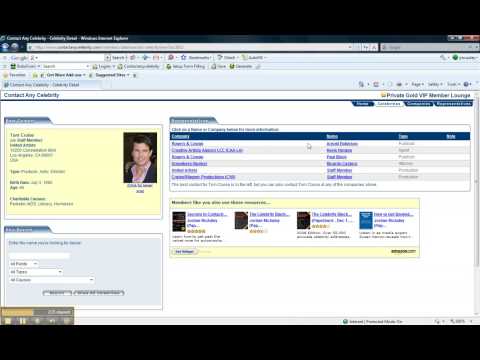
I know you used our Celebrity Black Book. I just wanted to point out to readers that in our online database at ContactAnyCelebrity.com, we break down celebrity names by causes they contribute to. This may be something you want to try. For instance, you could select Cystic Fibrosis, and it will list the celebrities who are known to contribute to Cystic Fibrosis.
Pam Ott is a librarian at McConnellsburg Elementary in McConnellsburg, Pennsylvania who gets her students to read by holding a reading auction using celebrity memorabilia. We spoke to Pam about how you can do the same.
Tell me about you and what you do at the school.
I am the librarian at McConellsburg Elementary in McConnellsburg, Pennsylvania. It’s a small school district. We’re located in south central Pennsylvania with a little over 500 students in our elementary school. It starts with 4-year-old kindergarten students and we go through the fifth grade.
You came up with the idea to have an auction – tell me about that.
Last year I had what we call a reading auction. The students are very involved in a program called Accelerated Reader through the school and I run it through the library. They read books and using the computer they take comprehension questions based on the book that they have read. They earn points based on the level of the book, the number of pages in the book, and how difficult it is for the students depending on their age level.
I started it last September, and they read books through April. Then I had an auction of all these prizes that I received from the celebrities using the addresses in the Celebrity Black Book. They had to earn at least 25 points, which means some of the students had to read 50 or 60 small literature books to come to the auction.
At the auction they had a paddle with their points on it that allowed them to spend their points just like at a regular auction. They could buy something of their choosing from everything I had listed. They got a paper list a few days before of everything I would be auctioning off, and then they spent their points based on how much they had read throughout the year and how many points they had earned through this Accelerated Reading program.
So the more they read the more they could buy?
The more they read the more points they got so the more things that they could buy. The kids that read all year earned a lot of points to get some pretty cool prizes.
Tell me about some of the items you received from celebrities.
We got lots and lots of tickets. We had tickets to TV shows like Wheel of Fortune. They sent us a lot of things, a little triangle of the wheel, Wheel of Fortune clothing, and tickets to the show. I had tickets to other shows. Ballet slippers that were worn by the New York City Ballet, so that was cool. Lots of clothing signed. I had a hat signed by Phil Knight, who is the chairman of Nike. Race hats signed by Jimmy Johnson and Kyle Busch. Michael Jordan signed a t-shirt.
I had a lot of pictures that were signed. Misty May-Treanor, the Olympic gold medalist, Arnold Palmer, Dan Jansen, and Tom Brady. Baseball bats signed by current and past baseball players. Hocky pucks, lots of hockey pucks. Golf gloves. Duke University had their whole basketball team sign a poster and sent that. Notre Dame and the University of Connecticut sent items, Penn State because of course, we’re in Pennsylvania.
How did you request the items?
I sent a generic letter on letterhead from our school, and actually some of the kids addressed the envelopes.
Who did you address the letters to?
For the sports teams and colleges just to them in general. For the celebrities I got their addresses out of the Celebrity Black Book. I was surprised at all the gloves and hockey pucks and bats. I had the kids address the envelopes, so I don’t know if that made a difference.
What did you say in the letters?
Let me see if I can find one here. “Our elementary school is sponsoring an auction for our students to promote reading. This is not a monetary auction. Instead, the amount to be spent at the auction will be obtained by reading books and earning points. Students are encouraged to read books of interest, pass a comprehension test and accumulate earned points throughout the school year.
Any item relative to your success or profession that you could donate for this reading auction would be greatly appreciated. These items will only be used as motivational rewards for our elementary students. The auction for our children in grade kindergarten through fifth grade will be held in the spring. Please join us as we promote the love of reading and encourage our students to be lifelong learners.” Then I signed my name and put it on letterhead.
Did you include a self-addressed stamped envelope or anything like that?
No because I just couldn’t afford it with the school. It was enough to get the postage the first time. And you know, I was really pleased. It was very successful. I think the kids would like it again. The first time they did it, some of the younger kids didn’t understand. But they’ll understand the next time we do it.
You got such great items.
Oh my yes. I was really pleasantly surprised. Now I did send some letters to local places in our area, and I got a lot of items from them too. I also got a lot of signed books because I sent letters to children’s authors.
That’s a great idea for schools. People overlook that. They focus on the big celebrities. One nonprofit who used our site focused on famous cartoonists from shows like The Simpsons and comic book artists and had great results.
Pam: I went through that whole Celebrity Black Book and highlighted everyone who I thought would be good for elementary students or people I thought the kids would relate to.
How long did most of the celebrities take to get back to you?
Pam: A couple of them called me and asked for the exact date of the auction because they wanted to make sure they got there in time. I actually received a few things afterward. Like the other day in the mail I got something from Adam Sandler. I only received about four or five items too late. Some of them came right away and some took a couple of months.
I first became aware of your auction from a newspaper article about it. That was very smart also.
I called three newspapers in the local area I’m in. The one you found was our local newspaper, but then I called two other ones and they both came and interviewed me. One of them actually came to the auction. I think the other one missed the auction but came after.
One of the newspapers was 30 miles away, so I was impressed with that. We had articles in three newspapers in the area and that made the kids feel good because they saw their picture in the newspaper. I was the one that called the newspapers to tell them we were having this I also sent them emails.
Very smart. That’s how it works with most publicity, it’s often the person who wants the press pitching a story.
Right. This one reporter wants to come back, so it was kind of neat.
Any other tips you want to share?
I had some of the older kids go through the Celebrity Black Book and pick out the names they wanted me to request items from. I had names highlighted so I told them if the name was highlighted that meant I had already requested something. But I was sure I missed some, so they helped me find people in the book I had missed. If I had had a volunteer that would have helped, because I did everything myself and it was kid of overwhelming at the beginning to decide who to target.
In our online database at ContactAnyCelebrity.com, we keep track of the causes celebrities contribute to. So you could choose Children and it will given you a list of celebrities who are known to contribute to children’s causes.
Oh yeah?
It was very smart of you to have the kids address the envelopes, because envelopes that are hand-written don’t often get thrown away. They usually get opened. Plus it let the kids feel involved. Did you explain to the students why certain celebrities didn’t reply?
Yeah, they would ask me sometimes and I just said I guess they have too many people to give items to. Sometimes I would get letters back saying we just target our state or general area, or we only target X. But when they’d ask, I’d say it’s just one of those things. You don’t always get what you ask for or what you want. It’s was a good lesson for them.
Andy Goodman is the co-founder of The Goodman Center that trains nonprofit foundations, government agencies, and educational institutions worldwide how to tell better stories about their causes.
We spoke with Andy about how you can tell better stories about your nonprofits, and of course using celebrities is a great way to do that.
How did you get started working with nonprofits?
I work out of Los Angeles. I came to L.A. in 1991 to be a TV writer. That was always my dream growing up. I got a job on a couple of sitcoms which your readers may know. One was called Dinosaurs, and it was on ABC for four seasons. Another one is The Nanny with Fran Drescher. I worked inside the Hollywood community with a lot of celebrities that you know about, and I did that for three or four years. Over those years, I became disenchanted with the TV business because surprise, surprise, I found out that it wasn’t the most fulfilling work in the world. Then I had a chance to go run a nonprofit.
I did that for five years and that experience got me into this world I’m in now, where I’ve met many nice, interesting, passionate people who work on various causes – the environment, health, education, the arts, etc. One thing I kept seeing was that while they were passionate about their cause, they weren’t very good at talking about it, at communicating what they did. No one had ever trained them to be professional marketers or communicators for their cause. I started my own business in 1998 to help good causes tell their stories better in various forms, and that’s what I’ve been doing for the last 11 years.
So you’re showing nonprofits that like television, they should use stories also.
Yes. Before television, I worked in radio, and before that, advertising. My whole background is in media and communications. What I’m doing is helping nonprofits, whether they’re trying to raise attention for their cause, raise money through fundraising, or get more people involved as members, staff or board members. Any way that an organization wants to talk about itself to attract attention, people or support, that’s where I come in.
Let’s quickly clarify that when we say “storytelling,” we’re not talking about making up stories, lies and exaggerations. Why don’t you talk about what storytelling is, especially in regards to nonprofits.
That’s a good question because when I first work with organizations often they’ll say, “Well, we are telling our stories.” They’ll say, “Look at this story we put in our brochure, in our annual report, or on our website. And it will be a story in the sense of a journalistic story or an article about what they’re doing, a nonfiction article explaining their work. That’s just not interesting because it’s dry storytelling, where in the first paragraph you’ll find everything you need to know.
Basically it followed this pattern: there was a problem, people were hurting, we came in, we fixed the problem, and people are all better now. So after the first paragraph, you don’t need to read any more. What I try to teach them is the art of true narrative storytelling. This approach tells a story that people have to follow from beginning to middle to end. It’s the kind of story you would see in a movie, watch on TV, or read in a book. It pulls you in, that makes you care, that makes you want to know what happens next.
It’s still true, it’s still non-fiction. However, it’s told more like a fictional tale, like a novel or a short story. That way, you generate more interest in people you’re trying to reach. I teach that there is a distinction between pure journalistic storytelling and true narrative storytelling
Do you add drama and excitement to make it more interesting?
I try to keep the drama and the excitement in. It’s usually there. There’s often plenty of drama. There’s conflict, there’s real emotional content. Yet when nonprofits tell their stories, they often drain all that stuff out. I like to joke with the nonprofits that they’re like vampires; they just suck the life out of their stories.
What are some tips nonprofits can use to incorporate what you do?
One thing I teach nonprofits is that good storytelling doesn’t give it all away in the first paragraph. It’s a story that builds slowly. You introduce a character, you identify what that person wants, you show them running up against obstacles along the way. When they encounter obstacles, that’s where it gets interesting, and then you show them overcoming those obstacles to finally get to their goal. That’s the basic structure of storytelling. It’s been handed down to us from the earliest myths and fables over thousands of years.
I also ask nonprofits to look at their work and figure out who the hero is. Who is the protagonist in your story? Is it the person you’re trying to serve? Is it someone working at your nonprofit? Figure out through whose eyes you’re going to tell the story. Follow the structure I just described and you’ll be on sound footing. There’s a lot more to add to that, but if you can get to this point that’s a good start.
Should nonprofits mostly use these stories in direct mail or on their website? People are so busy these days. Are they really going to read a long story? How do you handle the short attention span of people today?
They use their stories everywhere. What I tell them is that the stories are gold. This stuff is valuable in terms of capturing who you are, what you do, why you make a difference. So first, capture the story. Find out what happened and get it down on paper. Then you’ll tell it in different places. You may take the same story and tell it in a speech. You might put it on your Website in a shorter form because, like you said, people don’t keep reading. Or you might have a video version that people can watch. It may show up in longer form in an annual report or brochure that people would sit down and read. I try to encourage them to capture the stories first, to mine the gold. Then pound it into various shapes, length and sizes, depending on where you put it.
What is an example of a nonprofit that had a dry story that you helped make more interesting?
There’s a nonprofit called Experience Corps. What they do is match up older adults, retirees who have time on their hands, with kids in elementary schools who are falling behind in reading. It’s a tutoring program. The kids and the older adults are paired up and work together in available classrooms. This is a win-win-win. For the older adults, it’s a chance to do something constructive with their time and work with these enthusiastic young kids. For the kids, it’s a chance to get the specialized attention that they wouldn’t get otherwise. And for the teachers, it’s a chance for them to teach their class at the right pace and reintegrate these kids as they’re ready to be reintegrated. The teachers don’t have to slow down everything for the kids who aren’t getting it.
They wanted to tell stories about some of the older adults, some of the tutors who were coming into the classroom. One of their classic stories was about a guy named Frank Johnson who’s in his 70s. It’s a wonderful story to tell. Every day, Frank’s wife would drive him to school, and the kids would meet him at the school door. They would gather around him – he was a very tall gentleman so they’d look quite small in comparison. The kids would escort him into an empty classroom, and then one by one, they’d sit down next to him for their tutoring throughout the day.
If you were to look in while Frank was tutoring, you would see the kid reading away there, bent over a little school book, and it would look like Frank was looking around as if he wasn’t paying attention. But if that kid missed a word or mispronounced a word, Frank would be all over him. “I’m sorry, what was that? I think you left out a word there. Let’s go back and get that again now.” And at the end of the day, the kids would gather around him again and escort him to the front door. His wife would pick him up and drive him home. This volunteer, Frank, does this three or four days a week. He’s a much beloved man in this Minneapolis school.
What makes the story so extraordinary, and this is the part that you might have guessed already, is that Frank is blind. That’s why his wife drives him to school, and that’s why the kids guide him to the classroom. The way he’s able to know if a child has missed a word or not is that each night before he tutors, Frank finds out what the kids will be reading the next day. He has his wife read the books to him, and he memorizes them.
Wow.
It’s a remarkable story. Here’s the problem: When Experience Corps was first telling the story, it would read like this… Frank Johnson is a tutor at the Lucy Craft Laney School. He’s 70 years old and blind. So right there, in the second line, they’ve given away the big reveal of the story, the most interesting thing. Everything else that happens, the wife driving and dropping him off, the kids meeting him, the fact that he’s memorized the stuff is all just playing off what you already know.
This is an example where they were telling the story a certain way, and I had to say to them, “Look, you’ve got a great story here, but you’re revealing the most interesting piece right away. Hold that back, and you’ll have a much more powerful story.” Do you see the difference?
Oh, definitely. Before, they were giving the story away right at the start.
Right.
Whereas in your story, you have to wait til the end.
And it has some punch, it has some impact. If you didn’t guess, then you’d be thinking, “Oh, I see. That’s why this happened, etc. There’s a more emotional reaction to the story.
That’s one example; I could give many others. But in so many cases, the nonprofits will tell a story, and they’ll give it all away or they’ll give you the payoff in the first paragraph. Then the rest of the story is just a playing out of the events. It’s just not as interesting.
I’m a film major, and in screenwriting they teach you to “show, don’t tell. Most people tend to just say this happened, then that. But you need to show it and explain it. A marketing expert once taught me the saying, “facts tell, stories sell.” What kinds of stories should nonprofits be telling?
When I work with nonprofits, I tell them that there are six kinds of stories that I want them to collect. Most people default to success stories. In fact, when I’m coming in to do a storytelling workshop, they’ll say, “You’re here to teach us how to tell success stories, right?” And I say, “Yes, in part, but that’s not the full scope of what you do if you’re going to tell stories.
Number 1, tell stories about the nature of your challenge. What is it that you’re up against? What are you trying to fix in the world? Why are you here? Is it that there are too many homeless people? Is it that there are no arts in this community? Is it that people don’t have access to healthcare? Don’t give me statistics. Tell me the story about somebody who’s in pain, who’s lacking something, or who needs help so that I can feel what the problem is. I’ll be able to understand the nature of the challenge and have a feeling for why you do what you do. Start there.
Second, what is your nonprofit’s creation story? How did it begin? Was it one person’s idea that a group of people come together? Who was there at the beginning, and why did they start your organization? When you tell that creation story, often in this story is something about the people or the spirit or the vision that still informs the work today that you want to preserve in story form. That way, people today can know what was happening 40 years ago.
Third are success stories, but not just regular success stories. These are what I call “emblematic success stories.” Often, nonprofits will be working in a field where there are also several other nonprofits operating. Let’s say trying to help the homeless or prevent global warming. How do you stand out? In what ways do you achieve success that is unique to your way of doing things, that shows your approach or your particular style? What success story could be told only about this organization, not anybody else? What are your emblematic successes?
Fourth are performance stories. These are stories about your people. You have wonderful people working in your organization − bright people, persistent people, innovative people, etc. It’s okay to have stories where they are the hero, where they are showing wonderful traits. You let people know these are the quality people who work here. Those stories are particularly useful when you’re recruiting and you want to say, “Let me give you a sense of who works here.”
Fifth is the striving-to-succeed story. This is a story where you actually capture some of your failures, where you screwed up, fell short, just outright failed. But each of those stories should have, as the last chapter or the epilogue, something along the lines of here’s what we learned from it, and here’s how we did better the next time. You want to hold on to those stories to let people know that “we’re human, we make mistakes. but when we do, we learn from them, and we do better the next time. That’s part of how we work here and here’s a story that shows this.”
Lastly, the sixth story is the “where we are going” story. If we do our job right, five years from now, ten years from now, 15 years from now, what will the world look like? Also, take me into that world. Show me a person living in this world, how their life is better, so I can feel the satisfaction or the thrill of victory. Don’t say to me, “Well, we did our job right. There is 17 thousand more of this, 27 percent less of that.” That is just not going to move me.
These are the stories and the categories that I suggest nonprofits collect. If they can collect stories in each of these categories, and if they can make sure that all their key people know those stories and can tell those stories, then you have an organization that truly understands its own lore. They’ll be ready to tell the right story at the right time to the right person.
Even on television shows like American Idol, they don’t just show the contestants singing and performing. They always go back and tell their story because it makes you care more about the person.
American Idol is a very good example. The whole season is a narrative, going from the auditions, to Hollywood, to the Final 12.. You have the individual stories of the people, and then you have the continuing narrative of Ryan Seacrest versus Simon Cowell, of Paula Abdul being wacky when she was there, of Randy Jackson saying, “Dog.” You’ve got these characters and their stories. There’s plenty of narrative in American Idol.
That’s probably why it’s one of the most-watched shows, because there are so many different stories going on.
Absolutely.
Are nonprofits using storytelling in different mediums?
I see them using it more and more on the Web. They’re moving to video storytelling. As you said, people don’t want to sit and read a lot off a screen. I am seeing it used in their newsletters. In direct mail, they will tell stories to create an emotional link with the reader, and hopefully that turns into writing a check.
I mentioned your books in the introduction. Can you tell us a more about them? Which one would be best to start with for nonprofits that are interested in storytelling?
AG: I have one book on storytelling. It’s called Storytelling as Best Practice, and it’s a collection of different essays that I’ve written. It’s available on my website, agoodmanonline.com. The two other books you mentioned, Why Bad Ads Happen to Good Causes and Why Bad Presentations Happen to Good Causes are no longer available in hardcopy, but they are available as PDFs. They can both be downloaded for free. If you go to my website, to agoodmanonline.com or thegoodmancenter.com, you can get those two books as free downloads.
Are there any other resources, books or movies that you’d recommend? Everybody I know points to Star Wars as having one of the story structures that works really well.
The best book on story structure that I can recommend comes out of Hollywood, and it’s by Robert McKee. The book is called Story. McKee is considered the Guru of Story Structure. He teaches a regular class, and has consulted on movies. His book, which is a thick one, takes you through the basics of story structure, and I think it’s the definitive book on story structure. There is also Syd Field’s Screenplay. His book is legendary about writing a screenplay. But if you want to go deeper and understand story structure, read McKee.
There’s also Joseph Campbell.
Oh, yes, Joseph Campbell. When he was alive, Campbell wrote about the role of mythology in human life. He talked a lot about the hero’s journey. The basic structure of storytelling I talked about earlier is essentially the hero’s journey. That’s what was used in Star Wars. It’s the same structure that was used in The Odyssey. If you read anything by Joseph Campbell, it will talk about that. He was interviewed in a series by Bill Moyers, which you can rent on DVD or read as a book called The Power of Myth. There’s great stuff in there about the role of story in human life.
Is there anything else that you want to add?
If you want to give yourself a little gift, there’s a book called Listening Is an Act of Love. It captures some of the best stories from the NPR StoryCorps project. These stories came from just two people going into a booth, telling a story together, or telling it to each other. NPR recorded and transcribed them, and the book has 50 or 60 of the best stories. They’re short; they’re like three or four pages each. They’re beautiful. They’ll make you laugh, they’ll make you cry, they’ll make you think. It’s just a wonderful collection. Rather than reading how to tell a good story, just read people telling good stories, and I think you’ll absorb a lot from that as well.
Founded in 1993 by actor Andrew Shue (best known for playing Billy on the hit TV show ‘Melrose Place’), Do Something’s mission is to encourage the importance of community activism among youth, and to make it as popular as athletics and leisure activities.
Do Something is one of the largest nonprofit organizations in the U.S. that helps young people act to help the causes of their choice. They even have an annual televised awards show, the Do Something Awards, to honor teens making valuable contributions to their communities.
Along with acting as Do Something’s CEO, Nancy Lublin is also the founder of Dress for Success, contributes a monthly column to Fast Company magazine, and is the author of Zilch: The Power of Zero in Business. We spoke with Nancy Lublin about how Do Something utilizes celebrities in its mission…
What does your role as CEO encompass at Do Something?
My position as CEO actually stands for “chief old person.” It’s on my business card, the web site, everywhere. What I personally do as the CEO and chief old person is act like the office mom, I provide some direction and support and inspiration and hopefully enable all of the awesome kids in this office to do their jobs as well as possible.
What is Do Something’s mission?
Do Something is the organization that helps young people rock causes they care about. So if you’re a 17-year old boy living in the United States or Canada, we’re here to help you change whatever it is you care about.
It was founded by a celebrity, right?
Yes, it was founded by Andrew Shue back when he was on ‘Melrose Place.’ He convinced Aaron Spelling to give Do Something a minute of air time at the end of the show, and Do Something was born.
Nonprofits often wonder how to get a celebrity involved. What are your tips?
Nonprofits always like to reach for the shiniest star. I think that’s a mistake because everybody’s going after the shiniest star. The shiny stars are all really busy and over committed and may not even have a passion for your cause.
It’s far more important to have someone who genuinely cares about your cause and is really going to work. There are people way more famous than David Arquette, but not many more passionate about food and hunger issues. So he’s turned out to be the perfect celebrity for Feeding America.
I happened to go to the bookstore one day in New York City when he was living above the Madison Square Garden sign in a glass room to raise awareness for hunger.
I would much rather have David Arquette for three days in a glass box raising awareness for a cause than Angelina Jolie for 30 seconds on my red carpet. I mean a lot of celebrities will come to an event and smile for the cameras and be photographed, but David took three days of his life in that glass box working his Blackberry like a 12-year old girl trying to get Miley Cyrus tickets.
I wondered what he was doing up there. I figured a lot of interviews.
I’m sure he was doing interviews. He was constantly reaching out to other celebrities. I mean he’s the one who convinced Sheryl Crow to create a song for Feeding America. That’s the thing about him. You don’t just want a celebrity who’s passionate – you also want a celebrity who has a posse like David has a posse. A lot of people like him. He and his wife Courteney Cox have a lot of friends and he’s not shy about calling them or his cause.
How is it important to have your agreement with a celebrity in writing?
You want to know exactly what you’re going to be doing together, so you want a formal agreement. If you’re going to have someone like Lady Gaga as a spokesperson for Viva Glam, or David Arquette as the key quarterback to you Feeding America campaign for a year, you want to put all of that in writing.
It protects both sides. It protects the charity because you know how much time you have from that person, and how many days they’re available to work with you. It protects the celebrity because they have a clear understanding of what’s expected of them and then everybody’s happy. It’s kind of like a prenup!
Sometimes even if a celebrity is interested in a cause, it’s hard to get the people who handle them interested. Do you have any tips for that?
Cupcakes. I’m half kidding – we’ve sent a lot of cupcakes to various managers and publicists in Los Angeles over the years. I definitely think that’s one. The second is to be nice. These people are sometimes crapped on by the celebrity, and oftentimes by other agents or managers or lawyers. So it always pays to be nice. The third thing is to make their job easy.
If your nonprofit has a relationship with People Magazine, tell the celebrity’s publicist, “I’ve got People Magazine who would love to do a photo with your celebrity.” You’re doing the publicist’s job for her, so she’ll be so thrilled to be able to call up her celebrity client and say, “Hey, I’ve got People Magazine queued up for this.” Those are the three pieces of advice for getting the celebrity’s team excited.
Your team also does a lot of research on the celebrity’s you have at your events.
We do. What potential trade magazines or publications might be interested? What hobbies do they have? Did any of the talent you have coming appear in a pilot together ten years ago or did they once have a romance and no one knew. You want to find all of the potential story angles, which really requires you to get to know as much as possible.
It’s really about finding the story, isn’t it? Hollywood is a small word, so there’s probably some kind of drama or story between at least two of the celebrities at an event.
Absolutely. You want to connect the dots in a way that’s going to be interesting to journalists, and there’s always a way to. I mean maybe there’s a journalist at Variety who is a huge fan of Fran Drescher that’s going to be at you event. So you need to do that research.
That’s a great point. You want to research the journalists to find out what celebrities they’re most interested in covering. For instance reality stars are on the cover of every magazine right now, not A-list movie stars.
Yes. I would say that the only thing better than cupcakes is knowledge.
What about offering exclusives to the media?
Exclusives can be especially good if you parse them out. So you can offer exclusives to advance information. You have offer an exclusive on one particular celebrity. In other words, offer a journalist the ability to follow around one particular celebrity all night and interview them.
You can offer an exclusive to the green room, or behind-the-scenes coverage of how this event was put together. You can offer an exclusive on a particular story angle. Sometimes we think of exclusives as one magazine, one blog, one television show, one radio station, and that’s fine. But there are so many different wants to parse out exclusives.
What about the Internet? Have you worked with any YouTube stars?
You know, we’d like to. What makes a celebrity has really changed. It used to be that shining star, but you said before some reality TV stars are bigger guests these days than A-list, Oscar-nominated film stars. So right now when we look at celebrities we might work with we look to see if they have a Twitter following and how big it is.
For example, we’re going to be working with Demi Lovato this summer and we’re super excited because she has a really active Twitter following. With all of these tween celebrities like Demi and Justin Bieber and Nick Jonas, their followings are evangelical. Someone like Ashton Kutcher may have more followers than Justin Bieber, but Justin Bieber’s followers are more active.
Right, there are some celebrities who use Twitter a lot and some who just have an account.
It’s not even about whether they use it or not. It’s how active their following is. So like I said, Ashton Kutcher uses Twitter and he has more followers than Justin Bieber. But I would take Justin over Ashton any day because Justin’s followers are more active re-Twitterers.
It’s no longer about how famous you are or how big your following is, it’s how loyal your followers are. So, I love Demi Lovato. I love Nick Jonas. I love Justin Bieber because those celebrities have evangelical followers; crazy, fantastic followers and friends and fans. Some of the older celebrities like Angelina Jolie will have more name recognition, but Angelina’s fans are not as loyal.
When I was growing up you were never allowed to take your camera into concerts and take pictures. Then it seemed like they didn’t care and now they even seem to encourage it because artists realized they want their fans posting photos on blogs and Facebook. It only helps spread the word about them.
Absolutely. At the beginning of the event, we now say, “Everyone please turn on your cell phones and Twitter and Facebook and text like crazy.” It would be great if people would turn off their ringers, but we want them to have their cell phones on.
What tips to you have for right after the event? A lot of nonprofits have an event and then it’s over, but in the PR world there’s so much to do after the event to get the word out about what happened.
It starts the second the event is over. You should sit down with your team and talk about all of the stories, all of the items from the event. So and so was talking to such and such. There was a surprise celebrity who showed up, a really heartfelt moment, the great photos you got. Because now with Twitter and Facebook, if you don’t control the story immediately after the event, someone else who attended your event will. So if the event ends at 10:30, at 10:31 you want to start stringing together your photos and stories and getting those out there.
It used to be that everybody would go home, sleep and the next morning around 11 AM you’d get together and say, “OK, what do we have? Let’s start calling and placing items.” Now, it starts at 10:31 PM. During the events we actually have our tech team in a room at the event on laptops blogging, monitoring message boards and Tweeting the entire time. So, we’re actually doing it during the event.
How do you feel about gossipy stories?
We try to stay away from smutty stories. We really do. We partnered with a retailer once, and they sent out a bunch of stories about one of our celebrities that was totally false. They had their PR firm sent out the stories just so their name could get out there.
We were so mortified and the celebrity was so upset with us that I swore up and down to the celebrity that we had nothing to do with it and that attention in the National Enquirer was not something we ever aimed for because frankly, teenagers don’t read the National Enquirer. Those kinds of stories don’t help us reach our end goal.
We will never work with that retailer again, and I called that retailer and told them so. We could have done so much good work together, but we will never work with them again because of the way they treated the talent and the story.
Any tips for making sure the celebrities you invite really show up at your event?
There’s really no way. I mean you can send a car service – that helps. They’re usually more apt to show up if they have an actual speaking role, like if they’re going to be presenting something. We love to send them the bio and maybe a video or a photo of the kid they’re going to be presenting to because the really gets them excited.
In fact, we did an event in Los Angeles with Lauren Conrad. She was on MTV’s The Hills which is like the number one TV show with teenagers. She fell in love so much with this one kid. His name was Pat Pedraja. When he was 12 he had leukemia and because he’s half Cuban, he almost didn’t find a bone marrow match because there aren’t a lot of Hispanics in the bone marrow registry. So when he did get a match afterwards he said to his mom, “We’ve got to do something about this.”
He started an organization called Driving for Donors. Pedro and his mom went around the country that summer to Hispanic markets and they increased the number of donors on the bone marrow registry by a third. He’s just an amazing kid. Well, L.C. fell so in love with this kid and his story that now only did she show up to give him his award, she showed up with an iPod and song list on it that she made especially for him. Then she bonded with him so much that she invited him to be her Emmy date that year to the Emmy Awards!
Awesome! Any other cool celebrity stories?
Yeah. Olivia Wilde was also really great. She met one of our kids who was putting solar panels on a hospital in Gambia and she was like, “Wow, I’d really like to see that.” Our kid was smart enough to say, “Great, let’s arrange a trip!” The next thing we knew, Olivia Wilde was off to Gambia and visited the hospital in Africa, and it’s become her big cause and her big passion which makes a lot of sense because she’s on House, a medical drama. I think it really depends on the charity or the entrepreneur really seizing the moment.
What do you say to nonprofits who say using celebrities is not important?
I don’t think it’s about how big the nonprofit is. It’s about your target market. We don’t use celebrities because everyone is our office loves celebrities. We use celebrities because our target market is teenagers, and teenagers love celebrities. That’s just the reality of our target market.
We’ve been offered celebrities before who our teens just don’t know. For example, I love Susan Sarandon. You have no idea how many times I’ve seen her movies! But teenagers don’t really know who she is. So we would never put her in one of our public service announcements. Don’t use celebrities just for celebrity sake. It’s got to meet your organization’s purpose and make your target market happy.
- To find out how you or a teenager you know can get involved with Do Something, visit DoSomething.org or follow Do Something on Twitter and Facebook.